Monday, 15 May 2017

Grace O'Neill - Food Allergy Mum Interview Series

Food Allergy Week May 14-20, 2017

Australian children have the highest recorded rate of food allergies in the world. One in 10 babies born in Australia today will develop a food allergy. As, Food Allergy Week coincides with Mother's Day this year we are highlighting the awesome work of Aussie Food Allergy mums and advocates.
Australia has the unfortunate title of "Food Allergy Capital of the World". Hospital admissions for severe allergic reactions quadrupled in the last 20 years, while alarmingly the number of allergy-related deaths in Australia is increasing by 10 per cent each year. Food Allergy Week, May 14-20 is an initiative of Allergy & Anaphylaxis Australia to raise awareness of food allergies in Australia.

In our Food Allergy Mum Interview Series, we hope to promote understanding and insight in to the challenges of parenting a child with life threatening food allergies, along with the need for change to build an allergy aware allergy safe commUNITY!


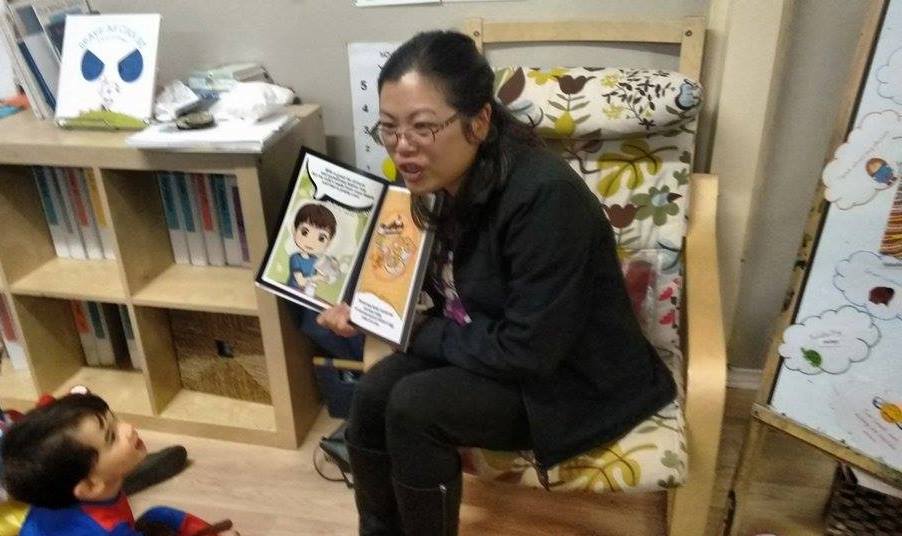
Grace O'Neill, Children's author & Pediatric Counsellor


What are your child’s allergies? When did you find out?

My oldest son is now 8. He was diagnosed at 9 months, after ongoing rashes. As a baby, he was at risk of anaphylaxis to 8 out of the top 9 allergens. He was also allergic to numerous other foods. He has since outgrown a number of his allergens and only reacts to cow’s milk, eggs, peanuts and most of the tree nuts. My younger son is now 4. He was diagnosed at 3 months old, with multiple non-IGE mediated allergies. I breastfed both of my kids until about 18 months age. Both of them required specific diets that were free from their allergens. Both our boys also suffer from asthma, although their asthma is now well controlled thanks to preventative medications.


What would be one of the most difficult aspects of daily living with food allergies?  Or one of the biggest challenges raising a child with food allergies?

The never- ending cycle of having to cook, clean and cook again means that there is rarely a meal off, let alone a day off. We are also very careful about who looks after them apart from their dad and myself.


How important is the support of friends, family, and community?

We have been surrounded by some very supportive friends and community. Just today we attended a birthday party, and since our son was unable to have the same lollies in his party bag, he was the only child to get OOSHIES instead. He was delighted! As I was explaining to my son that he might be able to have an icypole from the café, another friend rushed over to let me read the ingredients on her icypole. These kids are only 8, but they show remarkable compassion, understanding and support to our son.


What would you like other people to know about caring for a child with food allergies? How can families who don’t live with food allergies be extra safe around your food allergic child?

We don’t expect others to eat only the foods we eat. However, our friends have ensured that their children sit when they eat and wash up well afterwards to avoid contamination. We try not to focus on food when the kids are around. Instead, we focus on activities and having fun. This is something all the kids can share in!


Do you have a proud mum moment (of your food allergic child?) that you would like to share?

There are many proud moments as an allergy mum. Most recently, my son began to advocate for himself, asking the teachers whether he could substitute certain ingredients to make it safe for him to participate. Although I did have interactions with the teachers too, he was able to make suggestions that were suitable for him. Just two weeks earlier he came back from school with a recipe for Anzac biscuits that he had copied out of a book. He had actually substituted Nuttelex for butter, to make it safe for him to eat. I believe effective allergy education has meant that both our boys are able to live a very full, social and fulfilling life, despite their allergies.


What would be one piece of advice for parents who have a child with new food allergy diagnosis?

Join a community where you can ask questions and gain knowledge from others who have been there before. Facebook has lots of groups you can join, and gives us an opportunity to ask serious questions and occasionally just let off steam with others who understand. I facilitate a Facebook Group called Allergy Fun – Support. Topics range from food ideas, medical issues, social situations and even to social gatherings with local families. Although I run the group, there are many parents who contribute and whom I also learn things from.


How can we raise food allergy awareness in our communities?

I think we have made great head way in many areas of allergy awareness. However, I believe the social and emotional impact of food allergies is not often considered. Schools and Kinders can do a lot more to support our children in this area. This is the reason I wrote the book Allergy Fun – growing up with multiple food allergies

Thank-you for being a food allergy awareness advocate. What inspires you?

I didn’t choose to become an allergy mum, but being able to help others through personal counselling and group support gives meaning to the journey we are on. One of the most important parts of being an allergy parent is to make sure we take time out to rest, refuel and rejuvenate. Nobody can keep going all the time, and our kids need us to be well, both physically and mentally.


Grace O'Neill is a mother of two lovely boys. Her eldest is at risk of anaphylaxis to milk, eggs and all nuts, and her youngest has multiple food allergies. Grace is the author of food Allergy Fun, Growing up with Food Allergies designed for children with multiple food allergies. Grace is a trained counsellor and provides individual counselling for allergy parents and children. Allergy Fun is the coming together of her life with two allergy kids and her desire to see all kids develop into caring, confident and contributing members in our society. Allergies has taken our family's life on a different route than expected. Along the way, I have been blessed to meet many others who are on the same road, and by travelling together, we can encourage, laugh and cry, knowing we are not alone.


Sunday, 14 May 2017

Jackie Nevard - Food Allergy Mum Interview Series

Food Allergy Week May 14-20, 2017
Australian children have the highest recorded rate of food allergies in the world. One in 10 babies born in Australia today will develop a food allergy. As, Food Allergy Week coincides with Mother's Day this year we are highlighting the awesome work of Aussie Food Allergy mums and advocates. 

Australia has the unfortunate title of "Food Allergy Capital of the World". Hospital admissions for severe allergic reactions quadrupled in the last 20 years, while alarmingly the number of allergy-related deaths in Australia is increasing by 10 per cent each year. Food Allergy Week, May 14-20 is an initiative of Allergy & Anaphylaxis Australia to raise awareness of food allergies in Australia.

In our Food Allergy Mum Interview Series, we hope to promote understanding and insight in to the challenges of parenting a child with life threatening food allergies, along with the need for change to build an allergy aware allergy safe commUNITY!

Food Allergy Friend, Jackie Nevard


What are your child’s allergies? When did you find out?

Thai’s allergies are milk, egg, dust and cat, he also has VKC (Vernal Keratoconjunctivitis) an allergic eye disease. He was first diagnosed at 9 months with seven food allergies, although we knew something was wrong at around 8 weeks of age. Unfortunately, it took seven doctors and health workers before Thai was given a correct diagnosis.

What would be one of the most difficult aspects of daily living with food allergies?  Or one of the biggest challenges raising a child with food allergies?

As Thai has reached each developmental stage we have faced different challenges. When kids are little you teach them not to put food they find in their mouths and not to share food. For Thai, I think he is affected most by the social impact allergies have on him. He just wants to do and have what all his friends are doing or eating. Having a safe cake means he can participate, but he is still aware that this makes him different and he can’t be as carefree as his peers.

For me, the biggest challenge is school. Even with a school that has 26 kids with EpiPens, the first year was very hard. I don’t believe parents should have to battle to keep life-saving medicine in the classroom or justify why a 4-year-old shouldn’t carry a medical device. Why being excluded in the classroom is wrong and the list goes on. Every state should have guidelines for staff and schools to follow to avoid these daily battles. There should be allergy education in every school and childcare which is something I’m slowly changing with my Food Allergy Smart Program.


How important is the support of friends, family, and community? 

Support from the community is vital. In our community, many social occasions or celebrations, food is the focal point, which means kids with allergies can easily be excluded. It’s so easy to implement no food sharing, hand washing after eating, being allergy aware and providing non-food treats. When people actually stop and think how it would feel to be someone with a food allergy, they are often only too happy to help. Of course, not everyone gets it, I’ve always been a big believer that instead of running away from the problem or to pull the child out of the school/childcare if they don’t have good allergy management, it is far better to educate and change this for the better. If no one makes the change they want to see, nothing will improve and the next allergy family will only face the same battles and worse case, a child may be put in danger.


What would you like other people to know about caring for a child with food allergies? How can families who don’t live with food allergies be extra safe around your food allergic child?

It’s simple and so easy. In the work I do I teach all children to be Food Allergy Smart. We have 5 ways to help:
1 - Don’t share food with people that have allergies
2 - Don’t touch other people while eating
3 - Wash your hands after eating
4 - Tell an adult or teacher if your friend is having an allergic reaction
5 - Include your friends that have allergies


People shouldn’t underestimate number 5. So many kids are excluded from parties, play-dates, class celebrations and sleepovers. This has a big impact on a young child. I have also released a new book for parents, family and friends this year.

It’s important that if you are caring for a child with allergies whether you are a parent, grandparent or teacher, that you understand the basics, such as reading labels, the signs of an allergic reaction, cross-contamination and hidden allergens.


Do you have a proud mum moment (of your food allergic child?) that you would like to share?

There are so many proud moments but a few that come to mind would be, how Thai takes everything in his stride. Thai has undergone immunotherapy this year to dust. This has meant having 17 weekly injections, which he has also had reactions to.  We are now onto monthly injections and he has never complained once!

Another proud moment was when he realised that his EpiPen hadn’t come with him to a specialist lesson at school.  His relief teacher wouldn’t let him go back to the classroom for it. Thai knows how important it is to have his EpiPen nearby at all times. (his particular school is large with over 1000 students) He thought outside the box and asked another teacher aside that knew him if he could go back and get it. It would be confronting to challenge a teacher, he knows the importance of his EpiPen and will advocate for himself now. Since having his first anaphylaxis reaction to milk at age 7, he is excellent at self-management of his EpiPen.


What would be one piece of advice for parents who have a child with new food allergy diagnosis?

Don’t treat your child differently. Having food allergies mean we have to pre-plan everything but never let allergies define your child. Overcome problems together and give them the skills and confidence to manage their allergies as they grow.


How can we raise food allergy awareness in our communities?

We need to speak up and push for change if a policy is out of date or simply not the best way to do things. Teachers and educators are not experts at food allergies, by working together we can help teach them ways to keep our children safe. School is an ongoing process. Work with your teacher each year to ensure safe routines, inclusiveness and help them risk access planned activities out of the norm. Help share the Food Allergy Smart program, let your childcare or school know that we have resources and allergy sessions especially created to educate young children about food allergies.


Thanks for being an amazing, hardworking food allergy awareness advocate, and an inspiration. What inspires you?

Thank you for sharing the work I do Kylie, my little man inspires me every day and of course all the amazing food allergy friends I meet at my events.  Knowing that by educating ALL children I can make the world a safer place for children with allergies.  Food allergies are serious but learning about them can be fun!


Jackie Nevard is a hardworking food allergy awareness advocate, mum of two and author of the children's educational series My Food Allergy Friends. She runs her popular allergy awareness educational sessions aimed at all children, across Australia and New Zealand. Navigating the challenges we all face being a food allergy parent Jackie has turned this to her advantage and uses her real life experiences to help others.

Saturday, 13 May 2017

Sarah Gray - Food Allergy Mum Interview Series

Food Allergy Week May 14-20, 2017

Australian children have the highest recorded rate of food allergies in the world. One in 10 babies born in Australia today will develop a food allergy. As, Food Allergy Week coincides with Mother's Day this year we are highlighting the awesome work of Aussie Food Allergy mums and advocates.
Australia has the unfortunate title of "Food Allergy Capital of the World". Hospital admissions for severe allergic reactions quadrupled in the last 20 years, while alarmingly the number of allergy-related deaths in Australia is increasing by 10 per cent each year. Food Allergy Week, May 14-20 is an initiative of Allergy & Anaphylaxis Australia to raise awareness of food allergies in Australia.

In our Food Allergy Mum Interview Series, we hope to promote understanding and insight in to the challenges of parenting a child with life threatening food allergies, along with the need for change to build an allergy aware allergy safe commUNITY!


Sarah Gray, Charity Founder & Advocate


What are your child’s allergies? When did you find out?

Bella has anaphylaxis risk allergies to milk, egg, fish and chicken. She also has a rare allergic disease called eosinophilic oesophagitis (EoE) to which her additional known food triggers are wheat, soy and peanut. She was diagnosed at 18 months old with EoE and had her first severe allergic reaction to egg at age 3 (contact reaction, not from eating egg).

What would be one of the most difficult aspects of daily living with food allergies? 

Always having to be prepared for everywhere you go with food and EpiPen and always having to think before you eat or cook. Every time. You can’t safely do these tasks as an autopilot Mum! You’d think you would be able to after 12 years practice, but no, autopilot Mum has grabbed the wrong milk to top up an icing before and then noticed just in the nick of time!

What is one of the biggest challenges raising a child with food allergies? 

In our family the biggest challenge has been (and still is) the mental health impact. It affects everyone in the family, including those in the family that don’t have any allergies (I have a second daughter Olivia who is 11).


Do you have a proud mum moment (of your food allergic child?) that you would like to share? 

Bella’s a Cheerleader and I’m pretty vocal about how proud I am about that! She has been on an elemental formula since her EoE diagnosis and this supplements her limited diet. She had it through a gastrostomy feeding tube from age 7 – 11. She had her feeding tube removed because she was so dedicated to Cheerleading she wanted to go back to drinking her formula again so she could do more advanced stunts. If anyone reading this has had a child on elemental formula they will understand what a big deal it is to have a teenager still willing and able to drink the formula!


What would be one piece of advice for parents who have a child with new food allergy diagnosis? 

Please tell your kids about their allergy, explain it fully from a very young age so they understand exactly what they are allergic to, what their allergen looks like, what the other ingredient names of them are, what might happen in an allergic reaction etc. This is equally important for kids that have been allergic from when they were diagnosed very young and they have just grown up with their allergy and therefore that is all they know so the sit down moment explaining it to them might not have happened. You’ve got to get the balance right though so they don’t live in constant fear. Let them know about it but then explain what you are all going to do to prevent an allergic reaction. Include them in reading the ingredient labels, helping them to be responsible to always remember their EpiPen before going anywhere, hand washing, letting their friends know etc. It sounds like this would be obvious but I have come across kids over the years (as has Bella) who have allergies but do not really understand what this means for them.


Do you have a favourite, safe for your family, recipe or meal idea to share? What's one of the first recipes you taught your kids to make?

I run a Facebook page called Australian Allergy Friendly Finds and I’m always sharing my favourite family recipes on that page. I also share allergy friendly products and foods we find, cafes/restaurants… basically anything that has helped us in living with food allergies and I hope others find it helpful to them too.

How can we raise food allergy awareness in our communities? 

By participating in campaigns like Allergy & Anaphylaxis Australia’s Food Allergy Week. I love their Paint one Nail initiative! For awareness for eosinophilic disorders I invite you to check out our ausEE Inc. website (www.ausee.org) In 2009 I founded ausEE Inc., which is the national charity providing support and information to those with eosinophilic gastrointestinal disorders (EGID) including EoE. Each year we host Top 8 Challenge Day on the 8/8 to raise funds for research into eosinophilic disorders. For one meal or for the whole day we ask people to not eat any of the top 8 common allergenic foods (milk, egg, wheat, soy, peanut, tree nuts, shellfish and fish) and gain an insight into the life of someone living with an eosinophilic disorder and multiple food allergies. Initiatives like this help to raise awareness, it may only be for a day or a week but has the potential to have carry on effects that last the whole year! Empathy is the greatest gift of all!

Thanks for being an amazing, hardworking food allergy awareness advocate, and an inspiration. What inspires you? 

Both my daughters inspire me, more than what I can put into words!


Sarah Gray is the Founder and current President of ausEE Inc.,a charity that supports families effected by EGID disorders, raises awareness and fundraising for research. She also works part time in local government in finance and procurement. Sarah’s goal is to make sure that anyone who suffers from an EGID can turn to ausEE for support and to help raise critical awareness of the condition in all of Australia. She has two daughters, one of which (Bella) suffers from food allergies and EoE and who was the catalyst for forming the organisation in November 2009. She is an active food allergy awareness advocate and voice, and runs a food allergy support page Australian Allergy Friend Finds 


Sunday, 7 May 2017

Lazy Lentil Burgers

These Lazy Lentil burgers are a delicious, easy Sunday comfort food.
Dairy Free, Nut Free and Egg Free

Perfect for lunch box left overs too!

Let's face it, many of us don’t always feel like cooking, even though if you live with food allergies or coeliac disease, you often find you need to cook a lot more meals from scratch.

These Lazy lentil burgers are simple, healthy and easy to make with little effort. And they are economical too! 


Ingredients:
1 x can of Puy/ French brown lentils (one cup of cooked French lentils) 
½ tsp cumin ground
Fresh herbs – around a tablespoon finely diced parsley and/or coriander depending on your taste. 
3 x small- medium Potatoes quality, organic waxy potatoes such as nicola
Rice crumbs or safe bread crumbs for you
½ -very finely diced brown medium onion or shallots
1/2 small grated carrot (optional)
Good pinch salt to taste
Optional extras – turmeric, coriander spice, curry powder, chilli – great for adults
Oil for cooking


Method:

1. Cook your 3 medium waxy potatoes whole, in hot water (this is part of the laziness and keeps in the flavour too)

2. Meanwhile, saute onions in a minimum amount of olive oil on a low heat for around 10-15 minutes until caramelised. Next add any spices, grated carrot and then your French lentils.  Ensure your mix is fairly, dry you don't want too much liquid in your lentil mix. Turn off the heat.

3. When cooked, strain potatoes very well, and even pat dry. Less liquid the better. Mash potatoes roughly, with the back of a fork, not too smooth. We don’t need the mash to be super creamy.

Now, here is the only “tricky” part:

4. Combine your lentil mix and potato smash mash, fairly gently. Add your salt to taste. Then roll into balls - pat with your hands into a nice shape - around 5 cm round is good but you can make them bigger. And around 2-3 cm thick.

The mix should be more potato than lentil - so they will keep shape, if we get the mix too watery, or not enough potato they may fall apart in the pan. They should be fairly firm, almost like a dough consistency.

As we are not using egg or meat as a binder, we need to work fast.  You need to make your burgers while the potato lentil mix is warm or even as hot as you can handle, to make a nice firm mix.

5. Coat in your crumbs. Again, this needs to be done while mix is hot/warm, so the crumbs stick to the burgers. After you have coated in crumbs, straight to the fridge on a plate, not touching.

6. Lazy chill time
At least an hour should be fine, or until cooled completely.

7.Fry your lazy lentil burgers in shallow medium to high oil, until brown and crispy. Allow to sit for a minute or two ... enjoy! 

Serve with your favourite salad, flat bread or yoghurt 
Great with a little squeeze of lemon or lime


Fantastic snack for your lunch box or picnic. Great finger food for children. 

  
Notes:
If you’re not so lazy, soak some dried Puy lentils overnight, and cook gently, in a light chicken stock if you have it, for an even tastier result. You can also try adding to the lentil mix wheat free, cruelty free or vegan rashers of bacon, finely diced for extra saltiness.

Adults might like to add more spice too!


Gluten free
Wheat free
Dairy Free
Nut free
Vegan 

Friday, 27 January 2017

Have you seen our Valentines Day Giveaway?


We are sharing the love with a beautiful gift pack of Kiss Freely cosmetics
Simply like and comment on our FB giveaway post to enter before Saturday 4th Feb
Valentines Kiss Freely gift pack includes Sugar Plum lipstick, Candy Pink Lip gloss, Best Ever Body Butter, Sugar Scrub plus Barely there lipstick.!!
Feel free to share the love ❤

Visit us on Facebook now to find out more 

Kiss Freely, where a desire for food allergy friendly bath and body products has led to the creation of a line of personal care products geared towards those with food allergies and their loved ones.  
Kiss Freely products are free of the 8 major food allergens and then some! Kiss Freely also avoids the use of other potential allergens and is free from sesame, shea butter, peas,coconut, avocado and sunflower seed. Gluten Free and Vegan! 

Tuesday, 17 January 2017

Back to school with food allergies


Sending your child off to school with serious food allergies can be daunting and stressful. Having a good risk minimisation plan in place and building communication with your child’s school can make a big difference.

Make sure inclusion is a part of the plan. A good health care plan will consider the emotional side of food allergies such as anxiety as well as preventing discrimination and exclusion from learning.


 3 keywords to think about:

>Communication
>Planning
>Inclusion

 Back to school quick tips
  • Meet with the teacher and principal and school nurse if you have one.
  • Consider inclusion and how that will be ensured … communicate, include, assure
  • How will your child’s condition be communicated to ALL teachers?
  • Revise your plan at least every 12 months or anytime there needs to be a change
  • Communication – keep in touch with your child’s teacher and keep positive open communication. This is everyone’s job
  • Talk about the particulars of your child. For instance, discuss any anxieties your child has, asthma, previous reactions, personal nature, friendships etc. Every child is different and unique.
  • Ask for a communication letter to parents, to inform them and build a team of support. See a template letter here
  • Follow up!  Keep touching base to ensure the plan is being followed. Making a plan is the first step, ensuring it’s being followed is just as essential. Is your child being included? Is the school communicating to you? How is your child handling the plan, talk with your child as needed. 


Anaphylaxis risk management plan

What can you include?

Here is a starting point checklist of things you may want to include/consider:

1. List all allergies and other health conditions
What are the serious allergies? What other health conditions does your child have? For instance asthma, and any other health conditions.

2. Description of previous anaphylactic episodes
What were the symptoms? It can helpful to discuss with your child’s teachers to let them know how quickly these reactions can occur and to hear the details.

3. Where are your child’s EpiPens to be stored?
Everyone needs to know and agree. Never ever in a locked cupboard!  Emergency medicines must be easily accessible, and never more than a few minutes from reach.  It may be stored in first aid room, on the student, or in the classroom or a combination of these.  If being stored in the first aid room/area, is it organised, away from sunlight and heat, and labelled, not in a mess or hard to find in an emergency?

4. Cross-contamination from another child’s food
Regular discussions with the students about the importance of washing hands, eating their own food and not sharing food supervision of eating so that food is not shared and (child name)  does not come into contact with allergens. Washing tables if lunch is eaten in the class-room can be essential, and hand washing routines for the class may be essential too.

5. Allergens in party or special occasion food
  • No food from an outside source to be given to (name child) including treats for other children, or food prepared by other parents. Some state guidelines do outline how important this can be.
  • Parents to be liased with about food related activities ahead of time, and not to be socially excluded from a learning activity. Supply a treat box with safe cupcakes/treats for celebrations
  • Advocate for food free classroom celebrations which many schools are now moving towards.

6. Food-related activities in class
    • ALL food activities in class will be communicated to parents, whether eating or handling - with sufficient time to either give permission or to arrange a substitute food.
    • No food is to be handled or eaten by (child name) without express permission from parents.
    • Food rewards should be discouraged
    • Science with food should be discussed with parents first

7. Music classes
Music teacher to be aware there should be no sharing of wind instruments e.g.recorders. Speak with child’s parents if necessary to provide child’s own instrument.

8. Art classes
Check art materials. Recycled food materials should not be used. Ensure containers used by (name child) do not contain allergens, e.g. ensure masks, paints, glue, play dough, and ALL materials do not contain allergens for the child.

9. Picking up rubbish, or cleaning classroom.
As this is a possibility of touching allergens from rubbish in the playground, (name child) will NOT be asked to do rubbish duty or pick up waste.

10. Canteen: possibility of sale of a food containing allergen.
Encourage parents to visit and communicate to canteen and staff. Display photos of allergic children and their allergies in canteen, visible to all canteen workers. Staff, including volunteer staff to be educated in safe food handling procedures and risk of cross contamination of foods, and reading ingredient labels.

11. Excursions
Each excursion needs it’s own risk management plan, as well as communication with parents to identify any potential risks. Excursions, sports carnivals, swimming programs or sports days require careful planning and consultation with child’s family.

12. Part-time educators and casual relief teachers.
How is this communicated?  What is in the handover folder? Who is in charge of communicating to relief teachers?

9. Incursion presenters
To be made aware so they can manage potential anaphylactic risks and respond to anaphylaxis appropriately if it should occur. Parents should be notified about incursions ahead of time.

10. Pet visitors or school farmyard.
Think about asthma here too. Be aware that some animal feed contains food allergens e.g. nuts in birdseed and cowfeed. Does student need to wear gloves, or at least wash hands after touching animals.

12. School Camps
Camps require their own thorough planning, and separate detailed risk management plan that requires thought, consultation and communication. Some key points can be included here.


Every child is different, and their individual needs will be different and unique. The above list is intended as a guide and is in no way an exhaustive list. Please consult with your allergist and local education department for further guidance.

Building confidence with your child, school and teacher can be rewarding. Schools are for everyone, and every student needs to feel safe and valued.


Disclaimer, these are only suggestions, I am not a qualified medical expert, and this article does not constitute as medical or legal advice in any way, rather only suggestions as an allergy mum with experience in education sector.